.avif)


Taking care of your asphalt shingles can help your roof last much longer and save you money. Regularly checking for damaged shingles, leaks, and clogged gutters helps you catch problems early and extend the life of your roof. Ignore these issues, and you’ll probably end up needing a full replacement sooner than you’d like.
Simple steps like cleaning debris, removing moss, and making timely repairs keep your shingles strong. Using high-quality materials and trusted professionals for installation and maintenance really does make a difference. At Clear Choice Roofing, we help homeowners in Austin protect their roofs with expert care and solid materials.
You don’t have to guess how to keep your roof in good shape. This guide shares easy tips to extend the life of your asphalt shingles and dodge expensive damage. With the right care, your roof can stay tough for years.
Understanding Asphalt Shingles
Asphalt shingles are a popular roofing choice because they’re affordable and pretty simple to install. If you know what they’re made of, how they age, and what wears them out, you’ll have a much better shot at keeping your roof around for the long haul.
What Are Asphalt Shingles
Asphalt shingles are thin layers made mostly from asphalt—a sticky, waterproof material—mixed with granules from crushed stone or minerals. These granules shield the shingles from UV rays and help fend off rain and wind.
You’ll usually see two types: 3-tab shingles (thinner, less expensive) and architectural shingles (thicker, last longer). Most asphalt shingles last somewhere between 15 and 30 years, depending on quality and weather.
How Asphalt Shingles Age
Over time, shingles lose their protective granules, making them easier to damage. As they get older, you might notice curling, cracking, or brittleness, which can lead to leaks.
The sun’s heat dries out the asphalt, making it weak. In cold weather, ice and snow can stress shingles with freezing and thawing, which makes cracking more likely.
Common Causes of Shingle Deterioration
A few things speed up shingle damage: harsh weather (wind, rain, hail, heat), bad installation, or low-quality materials. Leaves, dirt, or algae can trap moisture and cause shingles to rot or loosen. If you want your roof to last, keep it clean and check it regularly.
If you’re not sure, working with experts like Clear Choice Roofing—who use quality materials and proper installation—can help your roof last for years.
Routine Roof Maintenance
Keeping your asphalt shingles in good shape means regular checks, cleaning off debris, and making sure your gutters are clear. These steps help avoid damage and keep your roof working well for many years.
Scheduled Roof Inspections
Inspect your roof at least twice a year, ideally in spring and fall. Look for cracked, curled, or missing shingles. Damaged shingles let water in, leading to leaks.
Check for granule loss or dark streaks, too. Pay attention to flashing and seals around chimneys or vents so you can catch leaks early.
If you spot trouble, call professionals like Clear Choice Roofing to give your roof a thorough look and fix small problems before they get worse.
Cleaning Debris Off the Roof
Clear off leaves, sticks, and dirt regularly, especially after storms or windy days. Debris traps moisture, which can cause rot, moss, or algae.
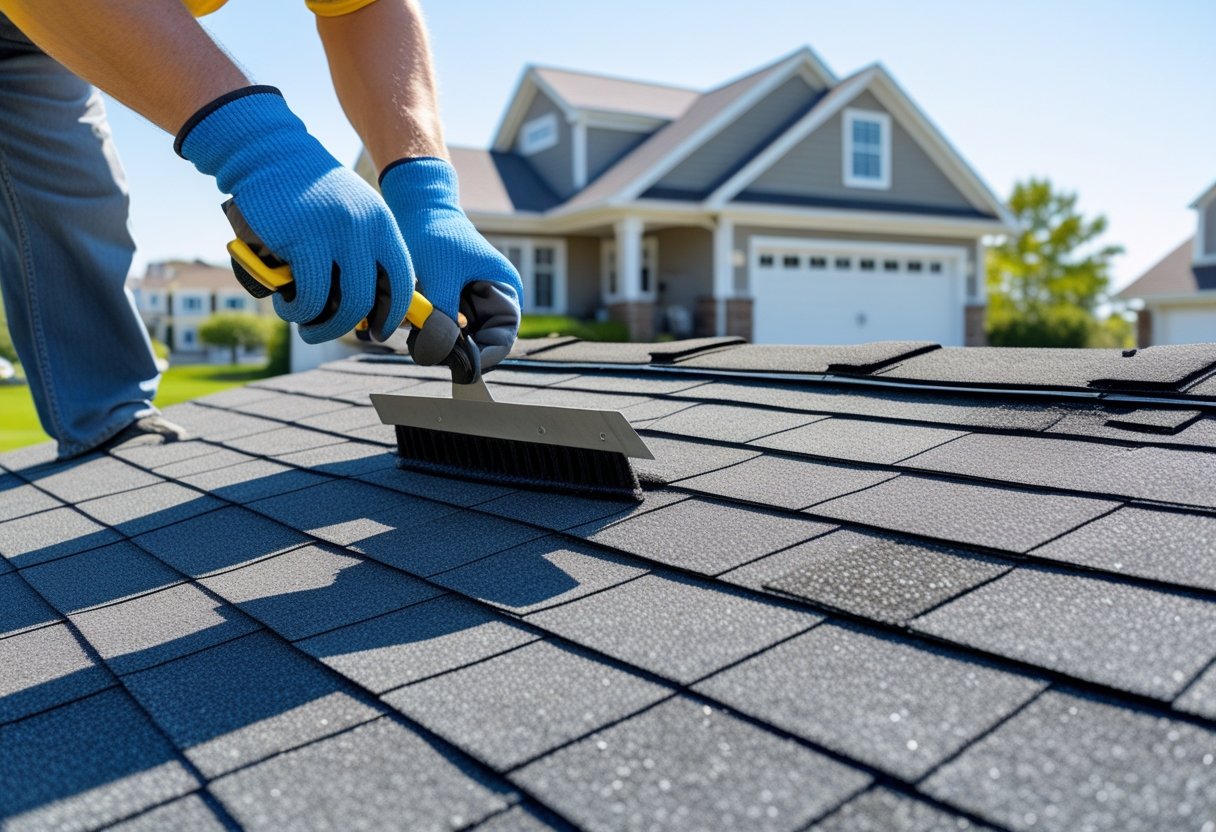
Use a soft broom or blower to sweep the roof gently—don’t go wild with a pressure washer, or you’ll strip off the protective layer.
Less debris means less damage and a roof that stays looking neat and lasts longer.
Keeping Gutters Clear
Clogged gutters cause water to back up under shingles, leading to leaks or wood damage. Clean gutters at least twice a year, or more if you’ve got a lot of trees nearby.
Scoop out leaves, pine needles, and anything else blocking water flow. Make sure gutters are secure and sloped so water drains away from your house.
Good gutters protect your roof’s edges and foundation by steering rain away from your home.
Preventing Moisture and Moss Problems
Moisture and moss can cause serious damage to asphalt shingles if left unchecked. Keeping your roof dry and free of growth improves its durability and helps you avoid expensive repairs.
Controlling Moss and Algae Growth
Moss and algae love damp, shady spots. To control them, remove any visible moss using a soft brush or a moss-killing product made for roofs. Don’t use a pressure washer—it’ll just damage the shingles.
You can install zinc or copper strips near the roof ridge. Rain releases small metal particles that help keep moss away. Clear Choice Roofing recommends this trick—it’s pretty simple and can really help.
Keep gutters clear so water flows off your roof. Standing water encourages moss and algae, which break down the asphalt. Checking your roof twice a year helps you spot these problems before they get out of hand.
Managing Attic Ventilation
Good attic ventilation keeps moisture from building up under shingles. Without proper airflow, heat and moisture get trapped, making shingles warp or wear out faster.
Make sure your attic has vents that let fresh air in and warm, moist air out. Ridge vents and soffit vents work well together. Ventilation also cuts down on ice dams in winter.
If your attic feels stuffy or damp, consider improving your ventilation. Clear Choice Roofing can help you figure out what needs fixing.
Addressing Damage and Repairs
To keep your asphalt shingles in good shape, watch for damage and fix problems early. This keeps your roof strong and prevents small issues from snowballing. Here’s how to spot damage, fix leaks, and replace shingles the right way.
Spotting Signs of Shingle Damage
Look for missing, cracked, or curling shingles. That’s your sign the roof needs help. Check for granules in your gutters or around the house—losing granules means your shingles are wearing out.
Dark spots or algae growth can signal moisture problems. If you see soft or rotting wood under the shingles, water’s getting through. Inspect your roof regularly, especially after storms, so you can catch issues before they get worse.
Fixing Minor Roof Leaks
Small leaks usually show up around flashing, vents, or loose shingles. You can patch these spots with roofing cement or a sealant made for asphalt shingles. Clean the area first so the sealant sticks.
If you find a leak, fix it quickly to avoid rot or water damage inside. You can handle small leaks, but if it’s big or you see more damage, call Clear Choice Roofing for help.
Replacing Individual Shingles
Swapping out a few damaged shingles costs a lot less than a full roof replacement. Gently lift the edges of nearby shingles, pull out the nails, and slide in the new shingle. Nail it down carefully.
Try to match new shingles to the old ones. If your roof’s pretty old, it might be smarter to let an expert handle it—no shame in that. Clear Choice Roofing can help with proper shingle replacement.
Proper Roof Installation Practices
Getting your asphalt shingles installed right is key to making your roof last. Using good materials and hiring skilled professionals can prevent early damage and save you money down the line.
Choosing Quality Materials
Start with high-quality shingles built to handle weather and wear. Look for products that meet industry standards and come with strong warranties. Materials with good adhesives and tough granules protect your roof from wind, rain, and sun.
Don’t skip underlayment—a water-resistant layer under your shingles keeps moisture away from the roof deck. Clear Choice Roofing uses synthetic underlayment, which lasts longer than old-school felt.
Pick the right fasteners, too. Nails should be corrosion-resistant and the right size. That keeps shingles attached during storms and helps prevent leaks.
Importance of Professional Installation
Even the best materials won’t do much if they’re installed wrong. Pros know how to line up shingles, space nails, and seal edges to keep water out. Mistakes like too few nails or missing seal strips can really cut your roof’s life short.
Hiring a trusted company like Clear Choice Roofing means experienced workers will follow industry guidelines, inspect your roof before installing, fix weak spots, and use the right number of nails per shingle.
Pros also check ventilation and flashing. Good airflow and sealed joints keep shingles from curling or rotting early. You want skilled hands for these steps.
Enhancing Durability With Sealants and Coatings
Sealants around the edges of your asphalt shingles help block water. Apply sealant smoothly and thick enough to fill gaps. Check it after storms to make sure it’s still doing its job.
Protective coatings add another layer of defense. They help reduce water and sun damage, which wear down shingles over time. In hot places like Austin, coatings can keep your roof cooler and help it last longer.
Here’s how to use sealants and coatings:
- Clean the roof before applying
- Use high-quality roofing sealant
- Reapply sealants every few years or after big storms
- Consider reflective coatings to cut down heat
Sealants and coatings are easy ways to help your roof last. At Clear Choice Roofing, we recommend regular maintenance to catch wear early and avoid expensive repairs.
By protecting edges with sealants and adding coatings for extra defense, you give your roof a better shot against weather and time. Clear Choice Roofing can help you pick and apply the right products.
Protecting Against Extreme Weather
If you want your asphalt shingles to last, you’ve got to protect them from tough weather like storms and snow. Taking steps to prepare your roof ahead of time helps stop damage before it starts—and can save you a lot of money and headaches later.
Preparing for Severe Storms
Strong winds and heavy rain can mess up your shingles if your roof isn’t ready for it. Before storm season hits, check your shingles for anything loose or missing, and fix those spots fast. Nail shingles down properly so they don’t fly off when the wind picks up.
Trim trees near your house so big branches don’t come crashing down on the roof during a storm. Clear out gutters and downspouts—if water can’t drain, it’ll just pool up and cause problems. A solid roof base and tough materials help too. If you want an expert to take a look, Clear Choice Roofing can inspect and beef up your roof so it stands up better to Austin’s wild weather.
Snow and Ice Management
Snow and ice can cause headaches for asphalt shingles if they pile up. When snow melts and then refreezes at the edge, you get ice dams—those force water up under the shingles. That’s just asking for leaks and rot.
To dodge these issues, keep your attic insulated and ventilated. Good airflow keeps the roof from warming up in patches and melting snow unevenly. After a storm, use a roof rake to gently pull off heavy snow, but don’t go crazy and scrape up the shingles. Walking on icy shingles? Not a great idea—they crack easily.
If you’re always dealing with heavy snow or ice, maybe it’s time to upgrade with weather-resistant materials. Clear Choice Roofing can help with that. A few smart moves now can save your shingles from winter damage.
Landscaping and Environmental Considerations
How you handle the trees and plants around your place can really help your asphalt shingles last longer. Sunlight and moisture matter too—get those right, and your roof’s in much better shape.
Trimming Overhanging Branches
Branches hanging over your roof? That’s trouble. They rub against the shingles and wear them down faster. Leaves and twigs drop onto the roof and into gutters, trapping moisture and inviting moss and mold.
Cut back any branches that get too close or touch your roof. This stops scratches and keeps debris down. Ideally, keep a gap of at least 3 to 6 feet between your roof and the nearest branches. Not sure how to do it safely? Clear Choice Roofing can help you find someone who knows what they’re doing.
Reducing Shade for Better Drying
Shingles need a chance to dry after rain or dew. If your roof stays damp, shingles weaken and mold moves in. Trees or tall shrubs that block the sun make drying tough.
Thin out or move plants that cast deep shade on your roof. Let the sunlight hit those shingles and you’ll cut the risk of moisture damage. A dry roof just lasts longer—it’s as simple as that.
Implementing Long-Term Care Strategies
If you want asphalt shingles to last, regular care’s a must. Check your roof twice a year—look for loose, cracked, or missing shingles, and give it a once-over after big storms too.
Don’t let leaves, dirt, or moss pile up. Clean the roof so moisture doesn’t stick around and create problems. You might want to add copper strips near the ridge—they help stop algae and moss from taking hold.
Keep gutters clear so water drains off, not back onto the roof. If you spot leaks or sagging, fix them before they get worse.
See a small problem? Handle it now. Waiting just makes things pricier later. For big jobs or full replacements, go with a licensed company like Clear Choice Roofing. They use solid materials and know how to keep Austin roofs in shape.
Here’s a quick checklist:
- Inspect your roof every 6 months
- Clear debris and moss regularly
- Check and clean gutters twice a year
- Repair damaged shingles quickly
- Consider copper strips for algae prevention
These habits help your shingles last and keep your home protected. Need a hand? Clear Choice Roofing’s always around to help you care for your roof.
Frequently Asked Questions
Taking good care of your asphalt shingles can help you avoid costly repairs and keep your roof looking strong. Using the right cleaning techniques, coatings, and maintenance routines can make a big difference in how long your shingles last.
What are effective methods to extend the life of my roof shingles?
Regular cleaning stops moss, algae, and dirt from wearing down shingles. Check your roof at least twice a year for anything damaged or missing. Jump on repairs early—leaks only get worse.
Trimming branches away from your roof cuts down on debris and shade, which both cause moisture headaches. Good attic ventilation helps too, keeping heat and moisture from building up under the shingles.
Is there a roof coating that can prolong the life of shingle roofs?
Yep, you can get special coatings for asphalt shingles. They add a shield against UV rays and water, slowing down aging and cracking.
A good reflective coating can also help a bit with heat, so shingles don’t get as stressed in the summer. Just remember, coatings aren’t magic—you still need regular maintenance.
Which DIY roof rejuvenation sprays are recommended for shingle care?
Some sprays have asphalt-based stuff to soften older shingles and help them flex again. They work best if your shingles are just starting to look tired, not if they’re already falling apart.
Pick a clear, waterproof spray with UV protection, and read the label before you start. Don’t spray when it’s rainy or blazing hot out.
What are the pros and cons of spray-on roof coatings for shingles?
Spray coatings can protect against sun and water, giving shingles a longer life. They’re quicker to apply than a full replacement, which is nice.
But they won’t fix major roof problems. They can’t replace missing shingles, and you might need to reapply every few years. Sloppy application could trap moisture, which just creates new headaches.
How much does it typically cost to apply a spray-on roof coating?
Prices vary depending on the roof size and what kind of product you pick. Most folks pay between $1.50 and $3 per square foot.
Clear Choice Roofing can give you a free estimate for roof coating in your area. Getting their advice makes it easier to choose the right product for your shingles and climate.
Is it realistic to expect asphalt shingles to last up to 50 years with proper maintenance?
Most asphalt shingles hang in there for around 20 to 30 years. If you go all out on maintenance and pick top-tier architectural shingles, you might squeeze out close to 40 years.
Hitting that 50-year mark? Honestly, that's pretty uncommon. Weather, how well the roof was installed, and how you care for it all play a role. If you keep an eye on things and handle repairs quickly, you'll definitely get the best lifespan possible out of your shingles.